[FREE] DOWNLOAD:
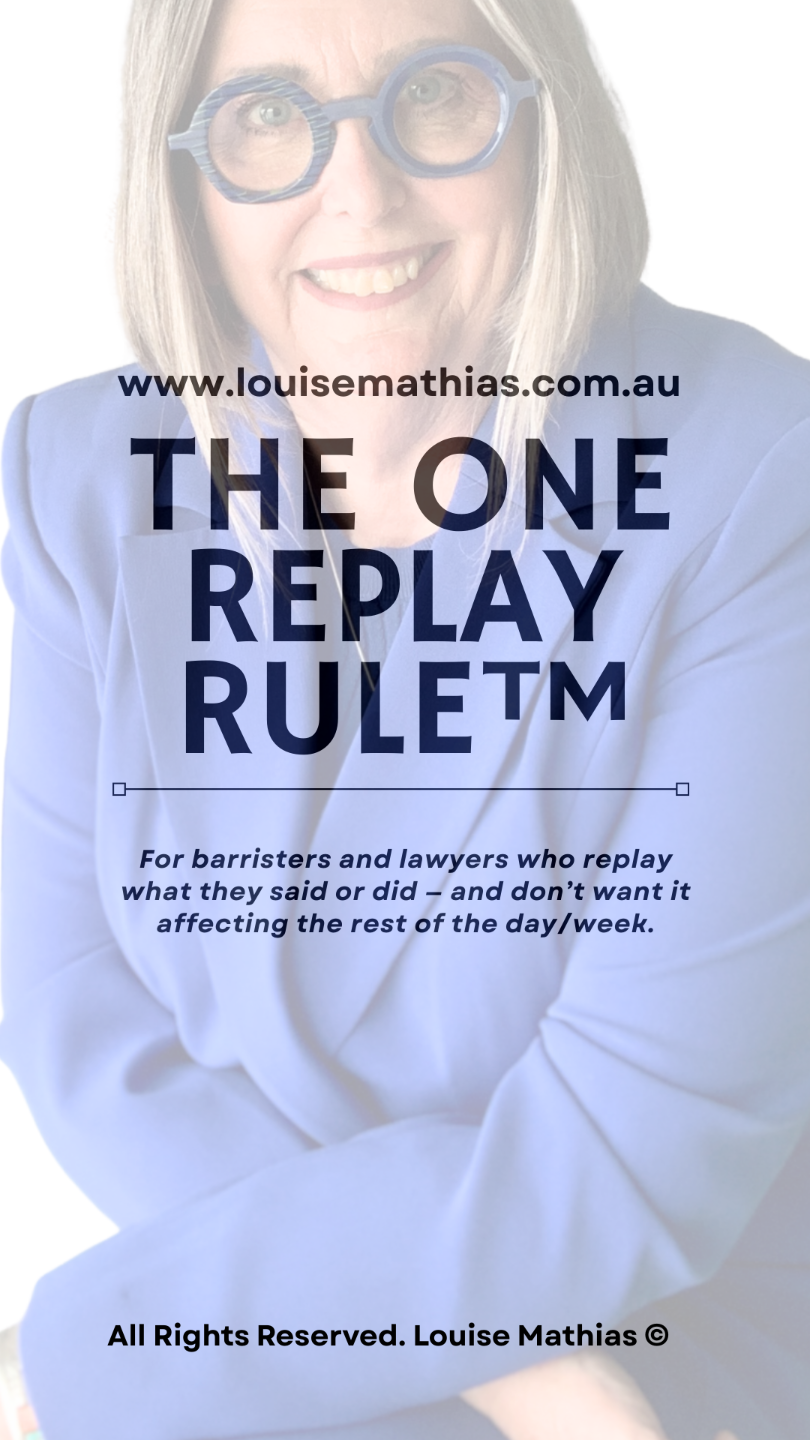
ONE REPLAY RULE
It’s finished.
You’re still thinking about it.
For 3+ PQE barristers and lawyers.
You’re back at your desk.
You’re onto the next task.
And you’re still constantly going back over:
- What and how you said it.
- What you delivered, and whether it was good enough.
- Whether you handled it the right way.
You’re working.
But part of your focus isn’t on what’s in front of you; it's replaying what happened in the past.
That’s one of the costs of unrestrained replay, and it's slowing you down.
Download the One Replay Rule™, and you’ll learn how to:
• End the replay
• Decide what to do differently next time
• Get back to work - efficiently.
Enter your details below.👇
Use it today, before you start your next task.
By downloading this FREE resource, you consent to being added to Louise's email list and receiving emails from her, including marketing material. Of course, you can unsubscribe at any time. Your privacy matters, and I don't take the privilege of being in your inbox lightly.
Louise Mathias is a practising barrister (ex-litigation) and mediator.
She has completed Harvard’s Program on negotiation, leadership and difficult conversations, and is certified in high performance, emotional intelligence and Dare to Lead coaching and advising.
She works as a mediator and with 3+ PQE barristers and lawyers who know they can operate at a higher level — and are prepared to be held to it.
Prepare.
Perform.
Lead.
Raising performance standards under pressure for barristers and lawyers.