
“You need to get up to speed.”
Sounds like an expectation.
It isn’t.
Up to speed on what?
By when?
What would you need to see to know they’ve "succeeded"?
Who decides?
What feedback will they receive along the way?
What help is available to get them there?
We use language like:
→ “Make progress.”
→ “Show more initiative.”
→ “We need to be comfortable that you can do this.”
→ “You should know this by now.”
And assume we’ve been clear.
We haven’t.
Sometimes people only discover what was expected after they’ve apparently failed to meet it.
Then it becomes clear, and people are held responsible for their "failure"
Like being pulled aside for asking a senior person a question you were supposed to ask [title].
Nobody told you that.
But you’ve broken the 'rule' anyway.
That’s not a high standard.
That’s an invisible test.
I believe in setting, demonstrating and expecting high standards of ourselves and others as leaders.
And helping people succeed isn’t just about setting them.
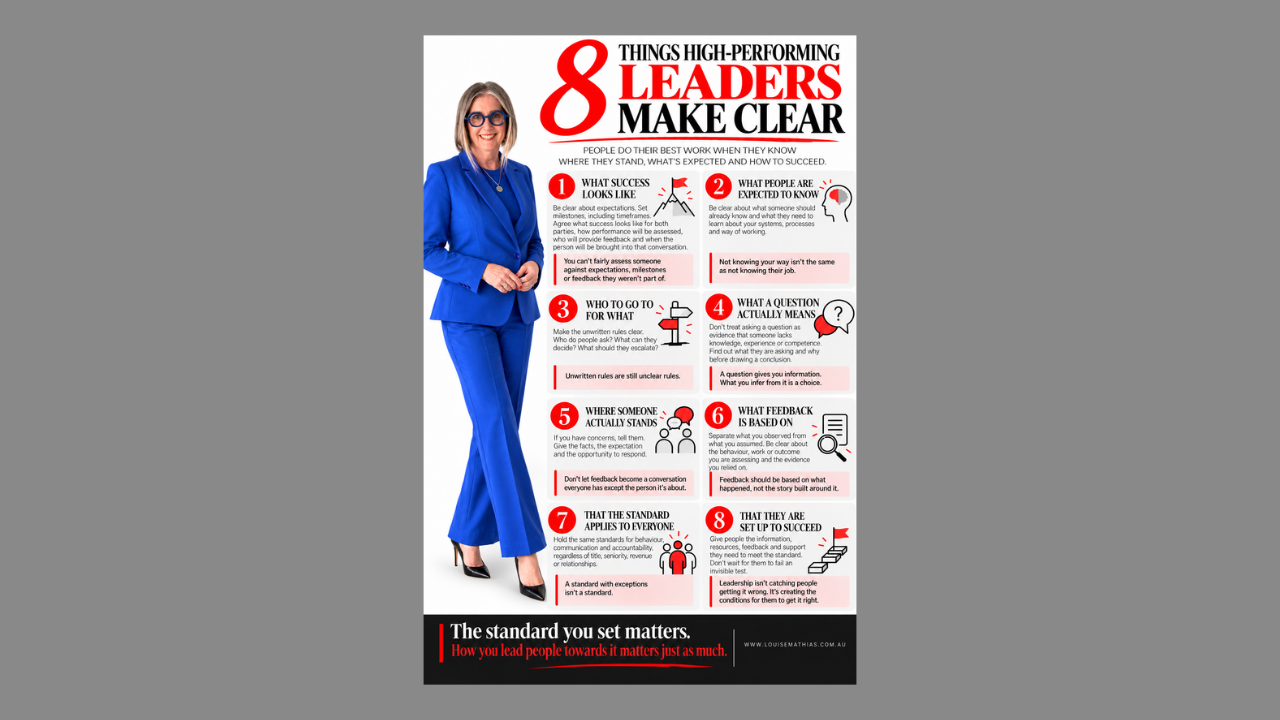
It’s making clear what they mean in daily practice, how people can reach them, what is expected of them (by when), how they will be assessed (by whom), and what support is available to help them meet them and how they know they have.
⬇️ Would your people know these 8 without having to guess?
